
Constitutional Law
The Battle of the Logos: Defining the Limits of INEC’s Power in Political Party Registration
The Battle of the Logos: INEC’s Power in Political Party Registration The Battle of the Logos: INEC’s Power in Political Party Registration A Critical Analysis of Constitutional Boundaries, Judicial Intervention, and the Future of Multi-Party Democracy in Nigeria Abstract The registration of political parties in Nigeria has emerged as a contentious battleground where constitutional rights […]

THE FEDERAL CHARACTER PRINCIPLE IN NIGERIA
THE FEDERAL CHARACTER PRINCIPLE IN NIGERIA: LAW, ENFORCEMENT, AND THE QUEST FOR NATIONAL UNITY I. INTRODUCTION A. Background and Context Nigeria, Africa’s most populous nation, is a complex federation comprising over 250 ethnic groups, multiple religions, and six geopolitical zones. This diversity, while a source of national strength, has historically posed significant governance challenges, including […]
Legislative Inaction and the Enforcement of Constitutional Governance in Nigeria
Legislative Inaction and the Enforcement of Constitutional Governance in Nigeria Or (Can Nigerian Legislators Be Sued for Failure to Perform Their Constitutional Duties?) 1. Introduction The National Assembly of Nigeria is vested with immense constitutional powers under the 1999 Constitution of the Federal Republic of Nigeria (as amended). From making laws under Section 4, to […]
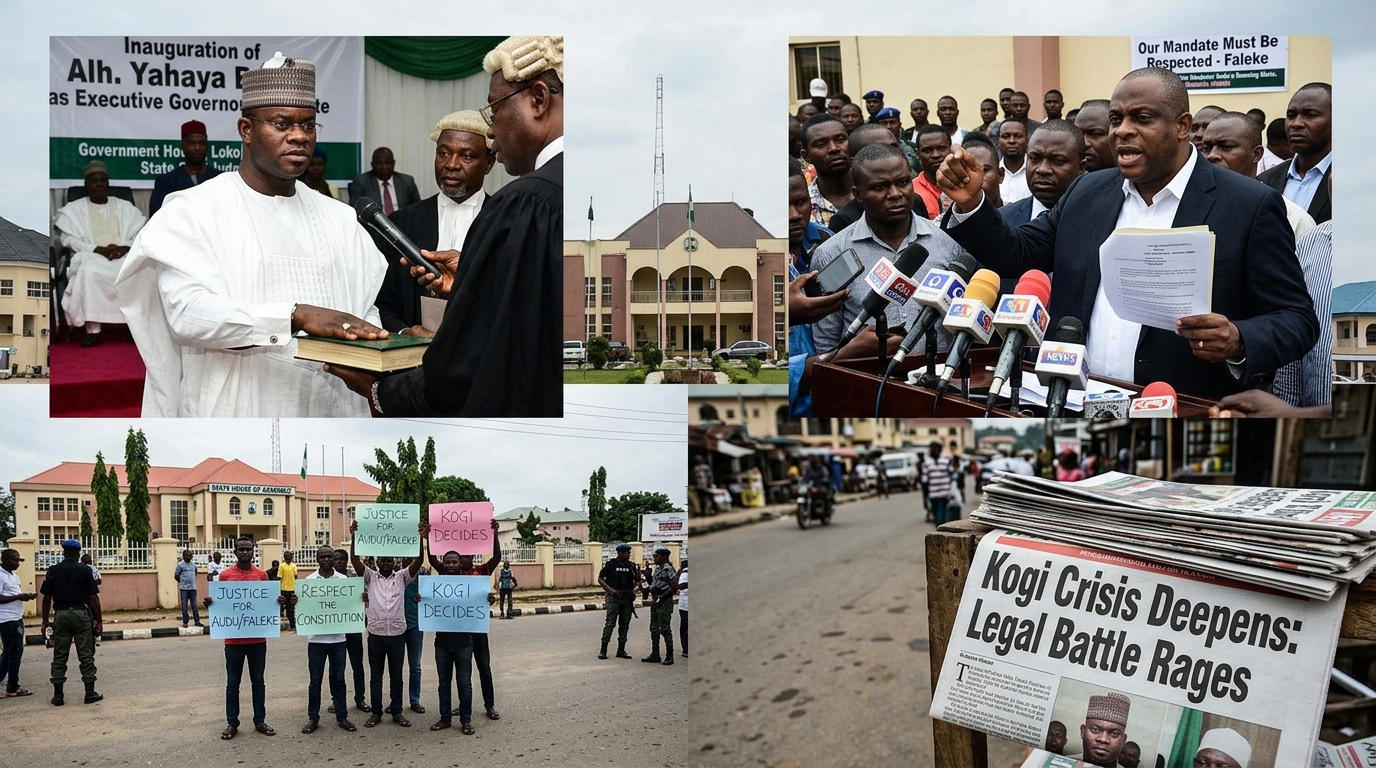
The Kogi Governorship Crisis (2016)
The Kogi Governorship Crisis (2016): A Jurisprudential Rupture: Defying Section 141 of the Electoral Act 1. Introduction ★ The 2016 Supreme Court decision in Yahaya Bello v. PDP effectively nullified Section 141 of the Electoral Act, allowing a candidate who did not participate in all election stages to be declared the winner. The 2015 Kogi […]
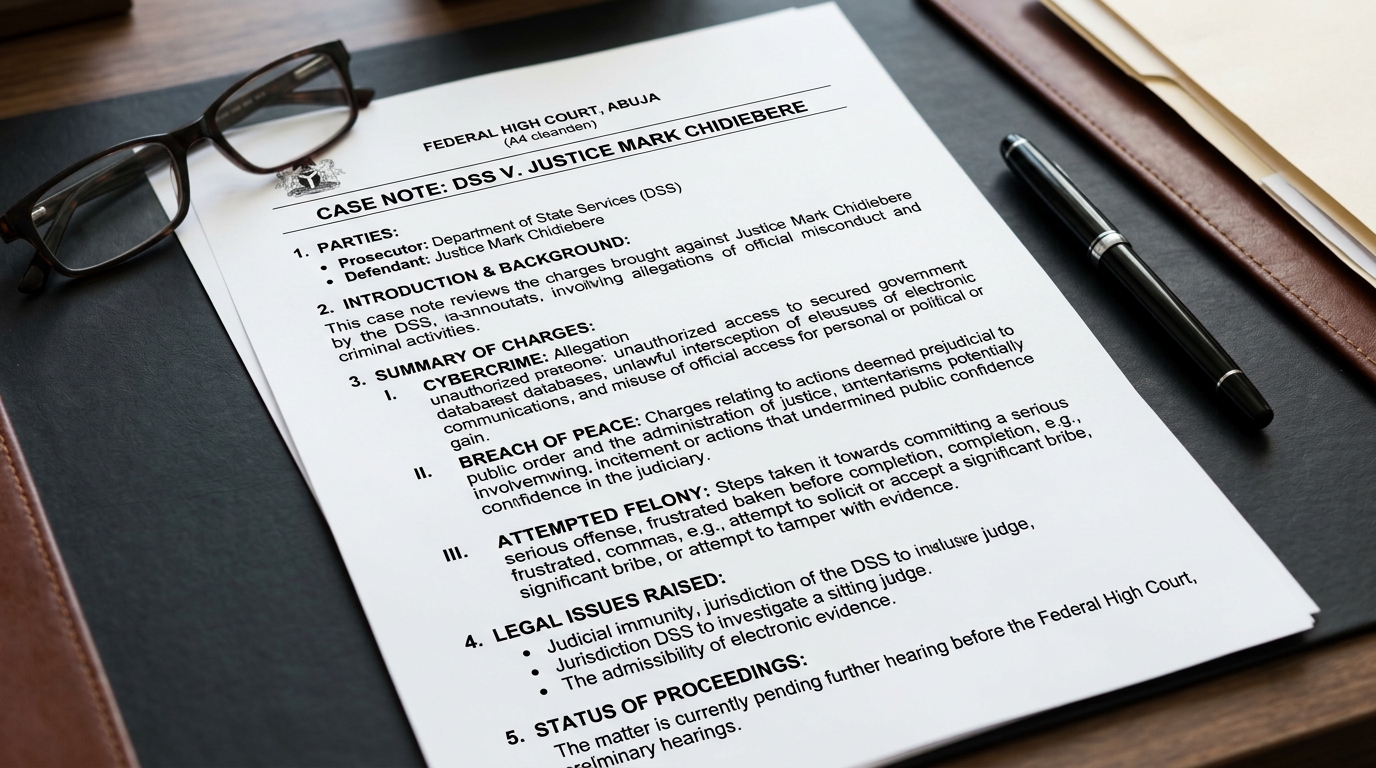
CYBERCRIME, BREACH OF PEACE, AND ATTEMPTED FELONY: A CASE NOTE ON DSS V. JUSTICE MARK CHIDIEBERE
CYBERCRIME, BREACH OF PEACE, AND ATTEMPTED FELONY: A CASE NOTE ON DSS V. JUSTICE MARK CHIDIEBERE ABSTRACT On 4th May 2026, Justice Mark Chidiebere, popularly known as “Justice Crack,” was arraigned before Justice Joyce Abdulmalik at the Federal High Court, Abuja, on a three-count charge filed by the Department of State Services (DSS). He pleaded […]