How to Get Free Legal Services in Nigeria
How to Get Free Legal Services in Nigeria
A Story I Heard
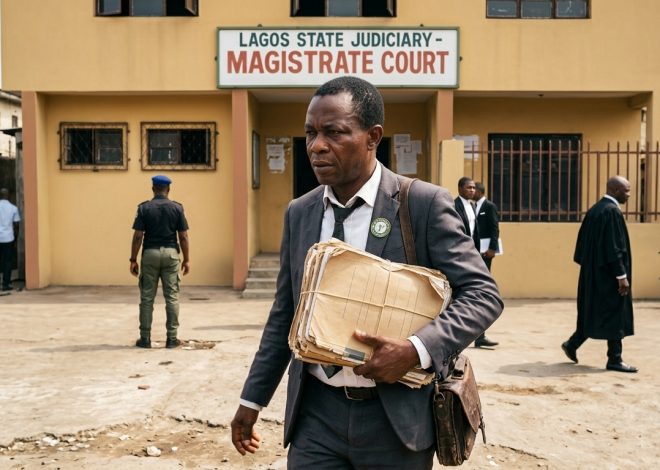
I once heard a story about a man who thought he could outsmart the system. He had a legal dispute-nothing too serious, he thought-and decided he didn’t need a lawyer. “Why should I pay someone when I can just read the law myself?” he told his friends. After all, the internet is free, and he was a smart man. He spent weeks poring over statutes, reading cases online, and drafting his own documents. He was proud of himself. He had saved thousands of naira.
The day of the hearing came. He walked into the courtroom with his folder full of printouts, confident and ready. The judge glanced at his filings and asked a simple procedural question. Our man froze. He had no idea what the judge was talking about. He had read the law, but he didn’t understand how the law moves-the timelines, the technicalities, the unwritten rules that every lawyer knows. His matter was struck out. He lost his case. And he spent the next three years trying to undo the damage, paying three times what he would have paid a lawyer in the first place.
That story stuck with me because it captures something essential about the legal profession. There is even a joke among lawyers that the best way to get free legal advice is to spend years in university, attend law school, pass the Bar exams, get called to the Bar, and then… give the advice to yourself. Seriously.
Think about it. If you don’t want to pay a lawyer for the years of training, the stress, and the expertise, you are more than welcome to undertake that journey yourself. Get the admission-which, by the way, is not easy with JAMB these days. Go through the rigorous academic process-four years of reading cases that make no sense until your third year. Pass the exams-and if you fail, you get to repeat. Then attend Law School-where they will tell you everything you learned in university is wrong. Pass the Bar exams-which have a failure rate that will keep you awake at night. Get called to the Bar-and pay for your wig and gown that cost more than a decent wardrobe. Then pay your Bar Practicing Fees year after year to keep your license active. After a decade of that, you can give yourself all the “free” advice you want.
Until then, the reality is that a lawyer is a professional who provides a specialized service that protects you from harm. As one lawyer humorously put it, “You’re not paying me to tell you the time. You’re paying me to make sure the time doesn’t run out on your case.” Another popular joke among lawyers goes: “A client asked me why my consultation fee is so high. I said, ‘Because I charge for what I know, not for what I say.’ The client said, ‘But you haven’t said anything yet.’ I replied, ‘Exactly. That’s the expensive part-knowing when not to speak.'”
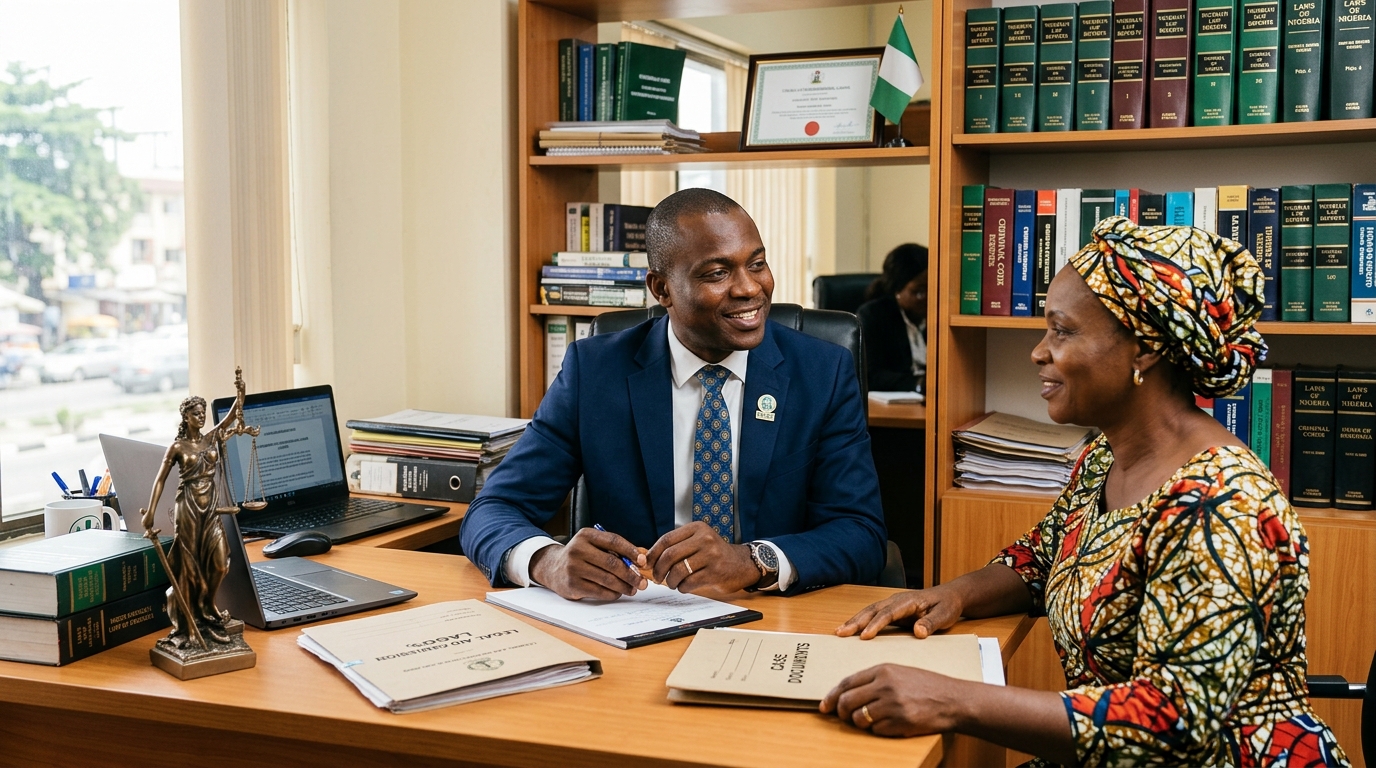
The good news is that you don’t need to become a lawyer-or lose your case like the man in the story-to get competent legal guidance in Nigeria. There are established structures offering free legal advice for those who qualify.
Official Government Initiatives
Legal Aid Council of Nigeria (LACON)
The most significant provider of free legal services in Nigeria is the Legal Aid Council of Nigeria (LACON). The federal government recently reaffirmed its commitment to expanding access to justice by inaugurating a new Governing Board to oversee the Council’s operations.
LACON’s mandate is simple: provide free legal representation for indigent Nigerians who cannot afford legal services. The scale of the need is substantial. The Director-General of LACON has stated that approximately 70% of Nigerians cannot afford legal representation.
The Legal Aid Council operates through several practical schemes:
- Police Duty Solicitors Scheme (PDSS) – Provides legal assistance to suspects in police detention facilities across the country. This scheme ensures that individuals have legal support from the moment of arrest, protecting their rights during interrogations.
- Court Duty Solicitors Scheme (CDSS) – Offers legal representation to indigent defendants in court, helping to decongest correctional facilities and speed up justice delivery.
The government has charged the new LACON board to extend services to all 774 Local Government Areas, ensuring that rural communities, where access to legal representation remains limited, are prioritized.
To access LACON’s services, visit any of the Council’s offices across Nigeria’s 36 states including the FCT. The headquarters is located at 22 Port Harcourt Crescent, Off Gimbiya Street, Area 11 Garki, Abuja.
State-Level Public Defender Offices
Several states have established their own public defender offices. For example, the Anambra State Government, through the Office of the Attorney General, has issued regulations enabling the Office of the Public Defender to provide free legal representation to indigent persons facing criminal prosecution.
Legal practitioners willing to offer pro bono services are invited to register with the Office of the Public Defender, demonstrating the commitment to ensuring that lack of funds does not deny any citizen access to justice.
Nigerian Bar Association (NBA) Initiatives
The NBA is a key partner in providing free legal aid to indigent and vulnerable Nigerians. Several programs exist through various branches:
- NBA Calabar Branch launched its 2026 Bar Week with a Legal Clinic offering free professional advice and services to members of the public. This initiative reflects the Bar’s commitment to community service and access to justice.
- NBA Annual General Conference Legal Clinics provide platforms for Nigerians to receive free legal advice. At the 2024 conference in Lagos, 214 beneficiaries received legal advice and representation in various civil cases through clinics supported by the Rule of Law and Anti-Corruption Programme (RoLAC).
Targeted Programs for Children
A significant partnership between the NBA and UNICEF has launched a N120 million initiative to provide pro bono legal services specifically for children across Nigeria.
The program targets children who are victims of violence, abuse, exploitation, neglect, trafficking, child marriage, as well as those in conflict with the law-all categories that often find themselves without adequate legal support.
Every NBA branch has been urged to establish or strengthen pro bono schemes focused on children, and law firms have been encouraged to dedicate part of their professional time to child protection cases.
Non-Governmental Organizations (NGOs)
Civil society organizations are increasingly stepping forward to fill the gaps where government institutions fall short.
Public and Private Development Centre (PPDC)
PPDC has provided free legal representation to over 5,595 detainees through its Reforming Pre-trial Detention in Nigeria Project. The results are impressive:
- 164 detainees regained their freedom after years of detention
- 50 police duty solicitors provided legal representation for 15,314 arrested persons across 50 police stations in five states
- Bail was secured for 8,552 arrested Nigerians
Legend Golden Care Foundation (LGCF)
This Abuja-based nonprofit has handled 1,037 pro bono legal cases and assisted over 200 detainees in various police stations across multiple states including Abuja, Nasarawa, Kaduna, Anambra, Adamawa, Rivers, Bauchi, Borno, and Niger States.
Their work extends beyond legal representation to provide psychosocial support to survivors of torture and internally displaced persons, as well as sexual and gender-based violence prevention awareness.
Clementina Legal Aid Philanthropy (CLAP) Foundation
CLAP is a UK-based nonprofit founded in memory of the late Mrs. Clementina Daley, dedicated to providing free or subsidized legal aid to vulnerable Nigerians and Africans. The foundation specifically targets those who are wrongfully detained, denied fair representation, or unable to meet bail conditions due to financial hardship.
Step-by-Step Guide to Accessing Free Legal Advice
Step 1: Determine Your Eligibility
Most free legal services in Nigeria are targeted at:
- Indigent individuals who cannot afford legal representation
- Vulnerable groups including children and women
- Persons facing criminal prosecution
- Those in pre-trial detention
Step 2: Identify the Most Relevant Organization
- Criminal matters: Contact the Legal Aid Council of Nigeria or the Police Duty Solicitors Scheme
- Child-related issues: Reach out to the NBA/UNICEF partnership program
- Civil matters: Approach the NBA branches or NGOs like PPDC
- State-specific matters: Contact your state’s Office of the Public Defender
Step 3: Prepare Your Documentation
Have relevant documents ready:
- Police statements or arrest records
- Court documents (if any)
- Personal identification
- Evidence of indigence (where applicable)
Step 4: Make Contact
Options include:
- Visit the LACON office in your state
- Attend an NBA branch legal clinic
- Contact an NGO directly (LGCF, PPDC, CLAP Foundation)
- Check if your state has a Public Defender’s Office
Important Considerations
- Not everyone qualifies – Free legal services are designed for indigent and vulnerable populations. The Legal Aid Council focuses on those who genuinely cannot afford legal representation.
- Limited resources – Many organizations face funding challenges. The Legal Aid Council has acknowledged “paucity of funds” as a persistent challenge, making it important to be patient and persistent when seeking assistance.
- Criminal vs. Civil matters – While criminal matters are generally prioritized for free representation, some organizations also handle civil cases. The NBA legal clinics at conferences have addressed various civil matters.
- Pro bono lawyers are professionals – Lawyers providing free services through these schemes are qualified professionals. The programs often involve training to ensure quality representation.
- Application process – Some programs require registration forms and may involve an eligibility assessment.
Conclusion
Free legal advice in Nigeria is not a myth, but it requires knowing where to look and understanding the established pathways. Whether through government agencies like the Legal Aid Council, professional bodies like the Nigerian Bar Association, or civil society organizations, help is available for those who qualify. You don’t have to be like the man in that story-confident but unprepared, losing everything because he didn’t know what he didn’t know.
Access to justice should never be a privilege of the wealthy alone. These initiatives represent the legal profession’s commitment to ensuring that poverty does not become a barrier to justice. As the Legal Aid Council’s mandate emphasizes: no Nigerian should be denied justice because of financial constraints.
Remember, the best time to seek legal advice is early-before small issues escalate into more complex problems. If you find yourself in a situation requiring legal guidance, explore these free options rather than navigating the justice system alone.
References & Citations
Legal Aid Council of Nigeria (LACON) Headquarters: 22 Port Harcourt Crescent, Off Gimbiya Street, Area 11 Garki, Abuja.
Reforming Pre-trial Detention in Nigeria Project by Public and Private Development Centre.
N120 million initiative for child protection and pro bono legal services.
Related Articles

The Scourge of Undercharging and Fee Undercutting in the Nigerian Legal Profession

The Nigerian Lawyer’s Guide to AI: A Complete Prompt Library for Smarter Legal Work

The Price of Wisdom: Understanding and Respecting Legal Fees in Nigeria