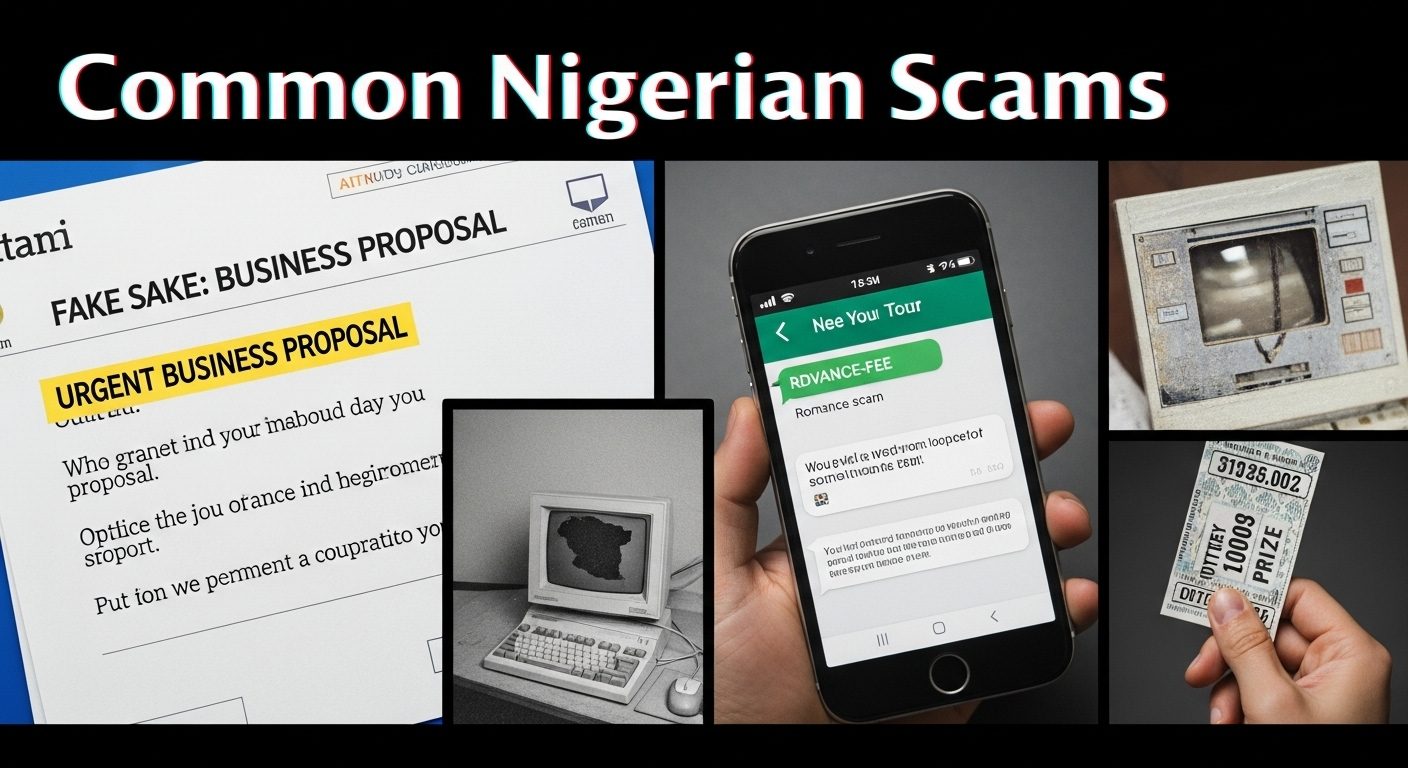
Common Nigerian Scams: Awareness and Prevention
Common Nigerian Scams: Awareness and Prevention
The phenomenon of Nigerian scams, widely recognized under the legal nomenclature of “419 fraud,” represents a sophisticated, multi-layered criminal industry that has evolved from crude postal letters into a global digital operation. Named after Section 419 of the Nigerian Criminal Code, these schemes exploit the fundamental pillars of human psychology: urgency, fear, greed, and trust. In 2023 alone, the financial impact was staggering, with internet users in Nigeria losing over ₦100 billion (approximately $60 million USD) to diverse fraudulent activities. This comprehensive article provides an in-depth analysis of the evolution, mechanics, psychological underpinnings, and the robust legal framework governing these deceptive practices.
I. The Historical Evolution of 419 Fraud
The origins of the Nigerian scam industry can be traced back to the late 1970s and 1980s, a period characterized by significant economic instability and the corruption of the oil boom. Initially, these frauds were perpetrated via faxes and physical letters, targeting international individuals with narratives of trapped wealth. The dawn of the digital age acted as a catalyst, allowing scammers to transition to email and social media, thereby targeting millions of potential victims globally at a negligible cost.
By 2026, the landscape of deception has further integrated modern global trends, such as cryptocurrency surges and political events, to enhance the relatability and credibility of fraudulent pitches. While the “Nigerian Prince” remains a persistent cultural meme, contemporary operations utilize advanced technologies, including deepfake audio and video, to impersonate trusted figures and bypass traditional security measures.
II. A Comprehensive Catalog of Deceptive Schemes
Modern fraudsters employ a diverse array of tactics tailored to specific human vulnerabilities. These schemes are categorized below by their operational mechanics and primary objectives.
1. Advance-Fee Fraud (The Classic 419)
This archetype remains the blueprint for many fraudulent operations. It typically involves an unsolicited contact claiming to be a high-ranking government official, lawyer, or banker who has access to a massive fortune trapped in a foreign account.
- The Narrative: The scammer weaves a compelling story of “frozen assets” due to bureaucracy, political instability, or an unclaimed inheritance.
- The Hook: The victim is offered a significant percentage (e.g., 20–30%) of the funds in exchange for their assistance in facilitating a transfer.
- The Fee Trap: To “release” the money, the victim is coerced into paying a series of upfront costs, including government taxes, legal fees, bribe payments to officials, or insurance bonds.
- The Cycle of Loss: Each payment is followed by a new, invented crisis, such as a sudden audit or a medical emergency of an official, ensuring the victim is bled dry until they realize the funds do not exist.
2. Romance Scams (“Catfishing”)
Romance scams target emotional vulnerabilities, often leaving victims both financially and emotionally devastated.
- Establishment of Trust: Scammers create fake profiles on dating apps or social media using stolen photos of attractive professionals or military personnel.
- The Grooming Phase: They build intense emotional connections over weeks or months, professing love rapidly and discussing a shared future.
- The Crisis Phase: Once trust is absolute, the scammer concocts an emergency, such as a medical crisis, a travel fee needed to visit the victim, or a business setback.
- The End Game: Victims often send money repeatedly via irreversible methods like wire transfers or gift cards, driven by a desire to help their “partner”.
3. Business Email Compromise (BEC) and CEO Fraud
BEC is a highly targeted and lucrative scam focusing on corporate entities, particularly those engaging in international wire transfers.
- Tactics: Scammers use spoofing (creating look-alike email addresses) or account compromise (hacking legitimate accounts via phishing).
- Execution: Posing as a CEO or a trusted vendor, the fraudster sends an urgent, confidential request to a finance employee to wire funds for a “time-sensitive acquisition” or an overdue invoice.
- The Result: Because the request exploits workplace hierarchies and emphasizes secrecy, employees often bypass standard verification protocols, leading to massive corporate losses.
4. Investment and Ponzi Schemes
These schemes exploit the “fear of missing out” (FOMO) by promising unrealistic, guaranteed returns on assets like cryptocurrency, forex, or real estate.
- Structure: Early participants are paid using funds from new investors, creating an illusion of profitability and success.
- The Rug Pull: Once the influx of new investors slows, the platform vanishes, and the operators disappear with the remaining capital.
5. Predatory Loan App Scams
This emerging threat exploits financial desperation through unregulated mobile applications.
- Data Harvesting: During installation, the app demands intrusive permissions for the user’s contacts, photos, and SMS gallery.
- Extortion: If a borrower misses a payment—often due to exorbitant hidden interest—the operators send defamatory messages and edited photos to the victim’s entire contact list to shame them into payment.
6. Phishing and Identity Theft
Phishing involves harvesting sensitive data such as Bank Verification Numbers (BVN), passwords, and One-Time Passwords (OTP).
- Mechanism: Victims receive urgent SMS or emails claiming their bank account is suspended, prompting them to click a link to a “cloned” website.
- Consequence: Scammers capture login details in real-time to drain accounts or sell the data on the dark web.
III. The Psychological Playbook: The Science of Deception
The success of these scams relies on the expert manipulation of human psychology rather than simple ignorance.
- Authority and Social Proof: Scammers lower defenses by impersonating officials, banks, or trusted institutions.
- Urgency and Pressure: By creating a “time-sensitive” crisis, fraudsters prevent victims from engaging in rational verification or consulting others.
- The Sunk Cost Fallacy: After the initial payment, victims often continue to pay more in a desperate attempt to recover their original “investment”.
- Secrecy: Victims are urged to keep the deal confidential, isolating them from potential warnings from family or friends.
- Shame as a Weapon: Many victims do not report the crime because they fear ridicule or embarrassment, which allows the scammer to remain active.
IV. Societal Context: The “Yahoo-Yahoo” Subculture
In Nigeria, internet fraud has evolved into a complex subculture known as “Yahoo-Yahoo”.
- Economic Drivers: High youth unemployment and stark inequality often make scamming appear as a viable path to wealth.
- Status Signaling: “Successful” scammers often use flashy cars and designer clothes to signal status, creating an aspirational lifestyle for others.
- Ritualistic Elements: Some practitioners involve “money rituals” (juju) or “yahoo priests” to spiritually manipulate victims or evade arrest.
- Community Complicity: In certain regions, scammers are seen as benefactors who provide local jobs, making community members hesitant to report them to law enforcement.
V. Legal Framework and Penalties in Nigeria
Nigeria has developed a robust, multi-layered legal framework to combat cyber-enabled financial crimes through various statutes and regulatory bodies.
Scam Category | Primary Statute | Legal Consequences |
Advance-Fee (419) | Advance Fee Fraud Act, 2006 | 7 to 21 years imprisonment without the option of a fine. |
Romance / Identity Theft | Cybercrimes Act, 2015 | Up to 3 years imprisonment and/or a fine of up to ₦7 million. |
BEC / Hacking | Cybercrimes Act, 2015 (Section 14) | Up to 7 years imprisonment and fines up to ₦10 million. |
Investment Scams | Investment and Securities Act (ISA), 2007 | Fines up to ₦10 million and up to 10 years imprisonment. |
Loan App Harassment | Nigeria Data Protection Act, 2023 | Fines up to ₦10 million or 2% of annual gross revenue. |
Phishing | Cybercrimes Act, 2015 (Section 32) | Imprisonment, fines, and asset forfeiture. |
VI. Landmark Nigerian Case Law Precedents
The Nigerian judiciary has established clear precedents demonstrating that electronic fraud is treated with the same severity as physical fraud.
- FRN v. Nwude & Ors (2005): Emmanuel Nwude defrauded a Brazilian bank of $242 million by posing as the Governor of the Central Bank. He was sentenced to 25 years imprisonment and ordered to forfeit massive assets, highlighting the role of restitution in sentencing.
- EFCC v. Fred Ajudua: A long-standing case involving the defrauding of a high-ranking military official of $8.4 million within a prison setting. This case reinforced the EFCC’s ability to pursue high-profile individuals.
- Onwudiwe v. FRN (2006): The Supreme Court held that the offense of obtaining by false pretense is complete even if the promised benefit (like a contract) never existed.
- EFCC v. Mike Ezea (2021): A BEC case where a syndicate hacked a Bulgarian vendor’s email to trick Oando PLC into paying $314,000. The defendant was sentenced to 2 years imprisonment, establishing BEC as a distinct cybercrime.
- FCCPC v. Soko Lending (2022): A landmark regulatory raid that shut down several digital lenders for data privacy violations and harassment, setting the standard for holding loan apps accountable.
VII. Protection, Prevention, and Redress
Vigilance is the primary defense in an increasingly digital landscape.
Core Prevention Strategies
- Independent Verification: Never trust the contact details provided in a suspicious message. Always find the official website or phone number of the organization independently to verify the request.
- Scrutinize Payment Requests: Legitimate entities will rarely demand payment via wire transfers, gift cards, or cryptocurrency, as these methods are irreversible and hard to trace.
- Protect Sensitive Data: Organizations like banks will never ask for your full password, PIN, or OTP via SMS or social media.
- Enable Security Features: Utilize two-factor authentication (2FA) and strong, unique passwords across all financial and social accounts.
Steps for Victims
- Act Quickly: The first 24–72 hours are critical for tracing funds and potentially freezing accounts.
- Preserve Evidence: Save all screenshots, emails, chat logs, and bank statements, as these are admissible in court under the Evidence Act.
- Report to Authorities:
- Nigeria: Contact the Economic and Financial Crimes Commission (EFCC), the Nigeria Police Force (NPF), or the FCCPC for consumer abuses.
- Global: Report to the FBI’s Internet Crime Complaint Center (IC3) or the UK’s Action Fraud.
Conclusion: A Strengthening Legal Front
Combating Nigerian scams is a multi-dimensional challenge requiring economic alternatives for youth, educational reform in digital literacy, and international cooperation. While fraudsters continue to innovate, the combination of a robust legal framework (including the Cybercrimes Act and Data Protection Act) and an informed, skeptical public remains the most powerful tool for dismantling these criminal enterprises. Vigilance, early detection, and prompt legal action are the keys to mitigating the damage caused by the anatomy of deception.
Related Articles

How to Get Free Legal Services in Nigeria

THE BUSINESS OF LAW: A GUIDE FOR YOUNG LAWYERS (American Edition)

Legal Stategies: Strategic Approaches to Nigerian Legal Process