The Price of Wisdom: Understanding and Respecting Legal Fees in Nigeria
The Price of Wisdom: Understanding and Respecting Legal Fees in Nigeria
There is a quiet tension that often simmers beneath the surface of the attorney-client relationship in Nigeria. It emerges when the bill arrives, manifesting as a sharp intake of breath, a sudden cough, or a muttered complaint about lawyers being “too expensive.” Some clients even develop a mysterious case of amnesia at that exact moment-suddenly forgetting they ever hired anyone. This discomfort with paying for legal services is a deeply ingrained cultural and historical phenomenon, but it is one that deserves a hard look. For a nation that prides itself on its sophistication and its journey toward a modern economy, it is time to have an honest conversation about why we undervalue the very people who protect our rights, our property, and our very liberty.
The Ghost of Colonialism and the “Saviour” Complex
To understand why so many Nigerians balk at lawyers’ fees, we must first take a brief journey into history. The origins of the legal profession in Nigeria are not rooted in commerce or corporate boardrooms. Instead, they are steeped in the struggle for liberation. Early legal icons were not seen as businessmen; they were viewed as freedom fighters who wielded the law as a weapon against colonial injustice. Figures like Obafemi Awolowo and others built their reputations on political activism and social justice, often representing the oppressed for little to no pay.
This legacy was cemented during the dark years of military rule. Lawyers like Gani Fawehinmi became the voice of the voiceless, challenging military decrees and defending political prisoners. In the public consciousness, the image of the lawyer became synonymous with the heroic defender of human rights, the person you called when the government was coming for you.
The problem arises when this historical template fails to evolve. Nigerians have carried this perception into the modern era, subconsciously viewing lawyers as saviours who should be motivated by morality rather than profit. When a lawyer presents a bill for a commercial transaction or a piece of litigation, it feels out of sync with this ingrained archetype. The client looks at the lawyer and thinks, “But you’re supposed to be a fighter for justice!” Meanwhile, the lawyer is thinking, “Justice doesn’t pay my children’s school fees, my friend.” A commercialized economy cannot function on the romanticized ideals of the past-no matter how noble those ideals were.
The “Lawyer Shopping” Mentality and the Race to the Bottom
This historical perception has created a toxic market dynamic. Many clients approach legal services not with a focus on quality or expertise, but with a “price-shopping” mentality. They seek advice from multiple lawyers, not to find the best strategist, but to find the cheapest option-as if they are comparing prices for tomatoes at the market. “Lawyer A said ₦500,000, Lawyer B said ₦300,000, so I’m going with Lawyer C who said ₦100,000 and a plate of jollof rice.” This behaviour is rarely seen in medicine or engineering. A client would not typically choose a surgeon based on who charges the least; they prioritize skill and experience. Yet, when it comes to legal matters-which can determine the fate of a business or the ownership of a family home-price is often the deciding factor.
A stark illustration of this “race to the bottom” comes from recent NBA reports. By December 2025, the NBA Remuneration Committee had already commenced investigations into five petitions filed against lawyers accused of undercutting professional fees. These petitions, submitted by both lawyers and members of the public, reflect a growing concern about the widespread devaluation of legal services. Consider the contrast highlighted by one legal professional: a lawyer handling property transactions is entitled to a minimum of 10% of the property value under the Remuneration Order, yet clients routinely refuse to pay this, while willingly paying “their cleaner double.” Let that sink in for a moment. Your cleaner gets paid more percentage-wise than the person securing your property title. If that doesn’t make you pause, nothing will.
The Unseen Investment: Why It Costs So Much
When you pay a lawyer, you are not just paying for the paper they write on or the few minutes they spend in court. You are paying for the entire intellectual and professional journey that led them to that moment. You are paying for the tears, the sleepless nights, the countless textbooks, and the years of their youth that they will never get back.
The Years of Sacrifice
Consider the investment: Four to five years of a grueling undergraduate degree, followed by a year at the Nigerian Law School. During this time, they are not making money; they are spending it. They are investing in textbooks that cost more than a small car, paying school fees that could have bought a house in the village, and forsaking years of potential earning. After the Call to Bar, the process continues with a period of pupillage or “law firm slavery” (as many young lawyers affectionately call it), where they are paid paltry sums while learning the ropes. One young lawyer famously joked, “I graduated with a degree in law and a master’s degree in suffering.” This is not just training; it is a financial sacrifice that many families make to produce that one lawyer. So when you refuse to pay, you are essentially telling that lawyer, “Your suffering was for nothing.”
Experience and Expertise
Furthermore, you are paying for the experience of the lawyer. A Senior Advocate of Nigeria (SAN) or a partner with 20 years of experience is not just a title; they represent a repository of knowledge, strategic thinking, and precedent. The Remuneration Order explicitly recognizes this, establishing fee tiers based on years of post-qualification experience (PQE) and rank. For instance:
- A lawyer with 10+ years PQE in a Band 3 state can charge a minimum of ₦200,000 for a consultation and ₦800,000 for miscellaneous civil litigation.
- Hourly rates for partners with 12+ years or SANs start at ₦200,000 in Band 3 states.
A junior lawyer may handle the research, but the senior lawyer provides the vision that wins the case. The client pays for the ability to navigate complex legal pitfalls because they have been seen before. As one senior lawyer put it, “You’re not paying me to know the law. You’re paying me to know which part of the law applies to your specific mess.”
Real-World Consequences of Non-Payment
The courts have increasingly had to intervene to protect lawyers’ rights to be paid for their work. In the case of Barrister Amobi Onuigbo v. Engr. Olusegun Eruja, the High Court of the Federal Capital Territory dealt with a situation where a client engaged a lawyer to recover original land title documents for a property in Dawaki, Abuja. The professional fee agreed upon was One Million Naira (₦1,000,000). The client paid a deposit of ₦300,000 but then refused to pay the ₦700,000 balance, despite the lawyer successfully recovering the documents. The lawyer had to file a lawsuit to recover his fees, seeking not just the balance but also interest and ₦10,000,000 in general damages.
Let’s appreciate the irony here: a client hired a lawyer, the lawyer did the job successfully, and the client refused to pay. So the lawyer had to use his legal skills to sue the client-for the very fees the client originally hired him to help with. If that’s not a plot twist worthy of Nollywood, I don’t know what is. The moral of the story? Don’t make your lawyer sue you. It’s embarrassing for everyone involved.
The New Dawn: The Remuneration Order 2023
The profession has finally had enough of the race to the bottom. The Legal Practitioners’ Remuneration Order 2023 is a binding regulatory instrument that establishes standardized minimum fees for legal services. It is not optional. Let me repeat that for the people in the back: IT IS NOT OPTIONAL.
What the Order Means for You
The Order, signed by the Attorney-General of the Federation, is designed to bring dignity and financial sustainability to the profession. It recognizes that Nigeria is not a monolithic economy, dividing states into three economic bands to ensure fairness. Band 1 includes Lagos, Ogun, Rivers, FCT Abuja, Kano, and Anambra; Band 2 includes Delta, Edo, Enugu, Imo, Kaduna, Akwa Ibom, Cross River, Ondo, Osun, and Ekiti; Band 3 covers all remaining states.
For instance, under the Order:
- For property valued at ₦50 million and below, the minimum professional fee is 10%.
- For property valued between ₦50 million and ₦100 million, it is 10% on the first ₦50 million and 5% on the subsequent amount.
- For property valued above ₦100 million, it is 7.5% on the first ₦100 million and 3% on any amount above that.
So if you’re buying a property worth ₦50 million, the minimum legal fee is ₦5 million. Not a suggestion. Not a negotiation. Minimum. If you think that’s expensive, try buying that property without a lawyer and see how quickly you lose it to someone with a “better” claim. As the saying goes, “Penny wise, pound foolish”-or in this case, “Naira wise, property foolish.”
The Danger of Underpaying
When a client insists on underpaying, they are not just cheating the lawyer; they are potentially invalidating their own legal process. State judiciaries, such as Akwa Ibom, have already begun enforcing the order by making it mandatory in land documentation processes. If you hire a lawyer who agrees to charge below the prescribed minimum to secure your business, the document they prepare for you may not be recognized by public institutions. In trying to save money, you could lose your property or your rights.
Let’s paint a picture: You find a lawyer who agrees to charge you ₦500,000 instead of the minimum ₦5 million because he’s “hungry.” You think you’ve gotten a bargain. You do the transaction. Two years later, someone challenges your title, and you discover that the document your lawyer prepared is invalid because it was not properly stamped or registered-because your lawyer, in his hunger, cut corners to make the low fee work. Now you’re in court, spending ₦20 million to defend a property you thought you saved ₦4.5 million on. Congratulations. You played yourself. The NBA has warned that any lawyer who continues to ignore the Order risks disciplinary action before the Legal Practitioners Disciplinary Committee or even prosecution. So that bargain lawyer might not even be around when you need him-he might be busy defending himself.
The Tease: Free Legal Advice
Some might argue, “Why should I pay? I can just look up the law myself.” There is even a joke among lawyers that the best way to get free legal advice is to spend years in university, attend law school, pass the Bar exams, get called to the Bar, and then… give the advice to yourself. Seriously.
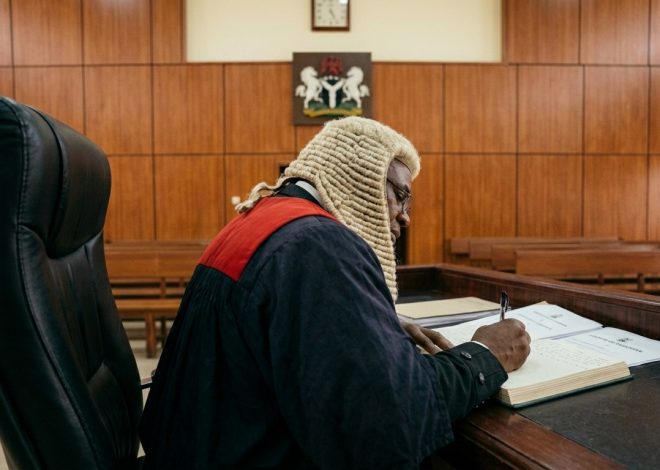
Think about it. If you don’t want to pay a lawyer for the years of training, the stress, and the expertise, you are more than welcome to undertake that journey yourself. Get the admission-which, by the way, is not easy with JAMB these days. Go through the rigorous academic process-four years of reading cases that make no sense until your third year. Pass the exams-and if you fail, you get to repeat. Then attend Law School-where they will tell you everything you learned in university is wrong. Pass the Bar exams-which have a failure rate that will keep you awake at night. Get called to the Bar-and pay for your wig and gown that cost more than a decent wardrobe. Then pay your Bar Practicing Fees year after year to keep your license active. After a decade of that, you can give yourself all the “free” advice you want.
Until then, the reality is that a lawyer is a professional who provides a specialized service that protects you from harm. As one lawyer humorously put it, “You’re not paying me to tell you the time. You’re paying me to make sure the time doesn’t run out on your case.” Another popular joke among lawyers goes: “A client asked me why my consultation fee is so high. I said, ‘Because I charge for what I know, not for what I say.’ The client said, ‘But you haven’t said anything yet.’ I replied, ‘Exactly. That’s the expensive part-knowing when not to speak.'”
The “Pro Bono” Exception
It is important to note that the law does allow for pro bono (free) services. However, this is an exception, not the rule. The Remuneration Order explicitly regulates this area to prevent abuse, requiring that discounts must be justified and pro bono services must be supported by a sworn affidavit detailing the circumstances. The Order also provides a procedure where a lawyer who intends to charge lower than the specified minimum must apply to the Remuneration Committee for approval within two days of receiving instructions, attaching an affidavit disclosing the facts. The Committee then has seven days to investigate and two days to give feedback.
Yes, you read that right. Even if you want to get free legal services, your lawyer has to swear an affidavit, submit it to a committee, and wait for approval-all within a tight timeline. This is not your lawyer being difficult; this is the law ensuring that free services are genuinely for the indigent and not just a way to undercut the profession. So if you’re hoping for free legal services, you’d better be genuinely in need-or be prepared to explain to a committee why your case deserves special treatment. And if you’re sitting in a mansion in Lekki, driving a Range Rover, and asking for pro bono services, the committee might have a few questions for you.
The Irony of It All
Let’s take a moment to appreciate the irony of the situation. Nigerians will pay a mechanic ₦50,000 to fix their car without blinking. They will pay a plumber ₦30,000 to unclog a toilet without negotiation. They will pay a tailor ₦100,000 to sew a wedding outfit without complaint. They will spend millions on parties, weddings, and funerals without a second thought. But when a lawyer-who has spent years studying to protect their rights, their property, and their freedom-presents a bill, suddenly everyone becomes a cost consultant.
One lawyer shared this story: “I had a client who negotiated my fee down from ₦2 million to ₦1.2 million. After I won his case and saved his business worth ₦500 million, he complained that my fee was too high. I asked him, ‘Would you rather have paid me ₦2 million and lost the case, or paid me ₦1.2 million and won?’ He had no answer.” Another lawyer joked, “Clients will spend ₦100,000 on a phone to call me and complain about my ₦50,000 consultation fee. The mathematics is not mathematicsing.”
Conclusion: Pay for the Precedent
The Nigerian legal profession is at a crossroads. The NBA is working to eliminate the “hungry lawyer” syndrome by enforcing the 2023 Remuneration Order. This is a positive move for the profession and for the economy.
If you hire a lawyer, do so with respect. Understand that you are hiring a professional whose value extends far beyond the hours they spend on your case. You are paying for their education, their experience, their ethical obligations, and their peace of mind. You are paying for the security of knowing that your rights are protected. A lawyer “paid the price of many years,” so when you receive that bill, pay it with dignity. It is not just a transaction; it is a recognition of the value of justice and the rule of law in our society.
As the saying goes, “If you think hiring a professional is expensive, try hiring an amateur.” And when it comes to the law, the amateur might cost you everything you own. So pay your lawyer. Pay them well. And while you’re at it, maybe throw in a bottle of wine. They’ve earned it.
References & Citations
Legal Practitioners’ Remuneration Order 2023, signed by the Attorney-General of the Federation.
Barrister Amobi Onuigbo v. Engr. Olusegun Eruja, High Court of the Federal Capital Territory.
Nigerian Bar Association reports detailing petitions and investigations into undercutting of professional fees as of December 2025.