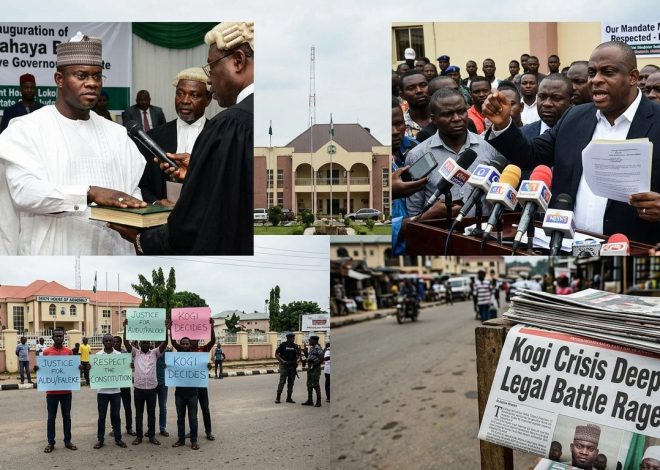
THE REGISTRATION OF THE NIGERIAN DEMOCRATIC CONGRESS (NDC)
THE REGISTRATION OF THE NIGERIAN DEMOCRATIC CONGRESS (NDC): A CRITICAL EXAMINATION OF CONSTITUTIONAL COMPLIANCE, JUDICIAL INTERVENTION, AND THE RULE OF LAW
I. INTRODUCTION
The registration of political parties constitutes the foundational gateway to democratic participation in any constitutional democracy. In Nigeria, political parties are constitutional beings-creatures of the Constitution whose existence, regulation, and operations are meticulously prescribed by the supreme law of the land, the Electoral Act, and the regulations of the Independent National Electoral Commission (INEC). The recent controversy surrounding the registration of the Nigerian Democratic Congress (NDC) presents a compelling case study in the fraught intersection of constitutional interpretation, administrative discretion, judicial intervention, and the political realities that shape Nigeria’s electoral landscape.
The NDC entered Nigeria’s political register in February 2026 under a cloud of controversy. Its journey from an unregistered association to a registered political party-and the subsequent legal battles seeking to undo that registration-raises fundamental questions about the nature of INEC’s constitutional obligations, the limits of judicial power, the sanctity of procedural compliance, and the delicate balance between the right to freedom of association and the imperative of regulatory order in the electoral process.
This article undertakes a comprehensive legal analysis of the NDC registration saga, examining the constitutional and statutory framework governing political party registration in Nigeria, the procedural irregularities that attended the NDC’s registration, the judicial decisions that have shaped its trajectory, and the broader implications for Nigeria’s democratic development.
II. THE CONSTITUTIONAL AND STATUTORY FRAMEWORK FOR POLITICAL PARTY REGISTRATION
A. Constitutional Provisions
The 1999 Constitution of the Federal Republic of Nigeria (as amended) establishes the comprehensive legal architecture within which political parties must operate. Sections 221 to 229 of the Constitution deal specifically with political parties.
Section 40 provides the foundational right of association, stipulating that “every person shall be entitled to assemble freely and associate with other persons, and in particular he may form or belong to any political party, trade union or any other association for the protection of his interests.” However, this right is circumscribed by a proviso that “the provisions of this section shall not derogate from the powers conferred by this Constitution on the Independent National Electoral Commission with respect to political parties to which that Commission does not accord recognition.” This constitutional qualification is of profound significance: the right to form a political association is not absolute but is subject to INEC’s regulatory powers and the requirement of recognition.
Section 221 provides that “No association, other than a political party, shall canvass for votes for any candidate at any election or contribute to the funds of any political party or to the funds of any election.” This provision underscores the exclusivity of political parties as vehicles for electoral participation.
Section 222 prescribes six mandatory conditions that an association must satisfy before it can function as a political party:
- (a) the names and addresses of its national officers are registered with the Independent National Electoral Commission;
- (b) the membership of the association is open to every citizen of Nigeria irrespective of his place of origin, circumstance of birth, sex, religion or ethnic grouping;
- (c) a copy of its constitution is registered in the principal office of the Independent National Electoral Commission in such form as may be prescribed by the Independent National Electoral Commission;
- (d) any alteration in its registered constitution is also registered in the principal office of the Independent National Electoral Commission within thirty days of the making of such alteration;
- (e) the name of the association, its symbol or logo does not contain any ethnic or religious connotation or give the appearance that the activities of the association are confined to a part only of the geographical area of Nigeria; and
- (f) the headquarters of the association is situated in the Federal Capital Territory, Abuja.
The Supreme Court has held that Section 222 “expressly and clearly lays down only six conditions that must be met before an association can function as a political party and, once the conditions are fulfilled, INEC has no option than to recognize the association as a political party.” This judicial pronouncement establishes that INEC’s power to register political parties is not discretionary in the sense of a power to refuse registration to an association that has satisfied all constitutional requirements-it is a ministerial duty.
Section 223 mandates that the constitution and rules of a political party shall provide for the periodic election on a democratic basis of its principal officers and ensure that the membership of its executive committee reflects the federal character of Nigeria.
Section 224 requires that “the programme as well as the aims and objects of a political party shall conform with the provisions of Chapter II of this Constitution.”
Section 225 empowers INEC to deregister political parties that fail to win a prescribed percentage of votes in elections or that contravene constitutional provisions.
B. The Electoral Act 2022
Section 75 of the Electoral Act 2022 elaborates on the registration process:
(1) Any political association that complies with the provisions of the Constitution and this Act for the purposes of registration shall be registered as a political party: PROVIDED, however, that such application for registration as a political party shall be duly submitted to INEC not later than 12 months before a general election.
(2) The Commission shall, on receipt of the documents in fulfilment of the conditions stipulated by the Constitution, immediately issue the applicant with a letter of acknowledgement stating that all the necessary documents had been submitted to the Commission.
(3) If the association has not fulfilled all the conditions under this section, the commission shall within 90 days from the receipt of its application notify the association in writing stating the reasons for non-registration.
(4) A political association that meets the conditions stipulated in the Constitution and this Act shall be registered by the Commission as a political party within 60 days from the date of receipt of the application, and if after the 60 days such association is not registered by the Commission, unless the Commission informs the association to the contrary, it shall be deemed to have been registered.
Section 75(4) introduces the concept of “deemed registration”-a statutory fiction that operates to cure INEC’s inaction where an association has satisfied all conditions and the Commission fails to act within the prescribed 60-day period.
C. INEC Regulations and Guidelines
The Commission’s Regulations and Guidelines for Political Parties (2022) provide the administrative framework for processing registration applications. These require associations to complete Form EC15, uploading inter alia the party constitution, manifesto, details of national executive members, and proof of payment of the prescribed fee.
III. THE NDC REGISTRATION: FACTUAL BACKGROUND AND PROCEDURAL HISTORY
A. The Genesis of the Controversy
The NDC’s journey to registration began with the formation of an association-the Nigerian Democratic Congress-and the submission of a letter of intent to INEC, containing the proposed party name, acronym, and logo. This represents the first step in the registration process, as articulated by Umar Ardo, promoter of the Alliance for Democratic Action (ADA): “You see, before you register a political party, the steps are one, you form an association.”
INEC responded to the NDC’s letter of intent by rejecting the request on the ground that the party’s logo was similar to those of existing political parties and associations. Under the law, an association aggrieved by INEC’s refusal ought to challenge the decision in court within 14 days. However, instead of instituting legal proceedings, the NDC wrote back to INEC requesting a reconsideration of its position. When INEC did not respond, the NDC sent a follow-up communication, and upon receiving no reply, proceeded to court with only its letter of intent-without having completed Form EC15 or uploaded the required documentation.
B. The Lokoja Judgment: Court-Ordered Registration
On December 10, 2025, Justice Isah Dashen of the Federal High Court in Lokoja ordered INEC to register the NDC as a political party. The court upheld the NDC’s constitutional right to freedom of association and held that INEC’s refusal to register the party violated that right.
Significantly, the judgment was delivered in just 32 days-a timeline that rival party chieftain Umar Ardo contrasted with his own association’s five-month wait. The speed of the proceedings, combined with allegations that the NDC failed to present supporting evidence (including its constitution and Electoral Act compliance documentation) during the original proceedings, made the judgment a target of criticism from the moment it was delivered.
C. INEC’s Compliance and Registration
In February 2026, INEC announced the registration of two new political parties: the Democratic Leadership Alliance (DLA) and the Nigerian Democratic Congress (NDC). INEC Chairman Joash Amupitan acknowledged that while only the DLA met all conditions for registration under the Constitution, Electoral Act, and INEC guidelines, the Commission registered the NDC in compliance with the Lokoja court judgment.
It is crucial to note that the NDC “was not among the associations pre-qualified for the 2025 party registration exercise.” Unlike the other 13 associations that INEC screened for registration, the NDC bypassed the normal pre-qualification screening process and secured court-ordered registration.
D. The Legal Challenges
Three concurrent legal challenges converged on the NDC’s registration:
First, the Peace Movement Party (PMP) filed an application before the Federal High Court in Lokoja, arguing that it was a necessary party to the original suit because the NDC’s registration was based on a logo that PMP had previously submitted to INEC. On June 26, 2026, Justice Isah Dashen set aside his earlier judgment, holding that it was “constitutionally defective” because it was delivered without hearing from all interested parties. The court found that material facts were suppressed in the earlier proceedings. The court ordered that the status quo be restored to what it was before the December 2025 judgment, pending the determination of the substantive suit, and directed that the substantive matter commence afresh with INEC, PMP, and NDC joined as parties.
Second, Ahidjo Ibrahim Karlahi, the Protem National Organising Secretary of the All Democratic Alliance (ADA), filed a suit before the Federal High Court in Abuja on June 2, 2026, challenging the legality of the NDC’s registration. On June 26, 2026, Justice Mohammed Umar held that INEC failed to comply with the provisions of the Constitution and the Electoral Act in registering the NDC, and ordered that the NDC be removed from the official register of political parties.
Third, Umar Ardo raised political objections to the NDC’s registration, alleging that the original Lokoja judgment was compromised by personal connections between the presiding judge and the NDC’s leadership.
E. The NDC’s Response and Appeal
The NDC has rejected the rulings and announced its intention to appeal to the Court of Appeal. The party’s National Chairman, Senator Moses Cleopas, argued that the trial court lacked the jurisdiction to revisit a matter on which it had already delivered a final judgment, contending that the court had become functus officio. The NDC maintains that it remains legally recognised and that the rulings do not amount to its deregistration.
IV. LEGAL ANALYSIS
A. The Nature of INEC’s Duty to Register
A fundamental question arising from the NDC saga is whether INEC possesses discretion to refuse registration to an association that has met the constitutional requirements. The Supreme Court’s pronouncement in INEC v. Musa (2003) is instructive: the court held that Section 222 “expressly and clearly lays down only six conditions that must be met before an association can function as a political party and, once the conditions are fulfilled, INEC has no option than to recognize the association as a political party.”
This establishes that INEC’s power is not discretionary in the sense of a power to refuse-it is a ministerial duty to register once the conditions are satisfied. However, this does not mean that INEC is powerless to scrutinise applications and reject those that fail to meet the requirements. The Commission is constitutionally and statutorily obligated to verify compliance before registration.
The critical question in the NDC case is whether the association had actually fulfilled the constitutional requirements before approaching the court. According to Umar Ardo’s allegations-which found favour with Justice Mohammed Umar’s court-the NDC neither completed Form EC15 nor uploaded the required documents before instituting legal action.
B. Procedural Compliance and the Principle of Exhaustion of Administrative Remedies
The NDC’s decision to approach the court with only its letter of intent, without having completed the full registration process, raises serious questions about procedural compliance. The law requires that an association seeking registration must complete Form EC15 and upload several documents, including the party constitution, manifesto, details of national executive members, and proof of payment of the prescribed fee.
The doctrine of exhaustion of administrative remedies requires that an aggrieved party must first exhaust available administrative procedures before resorting to judicial intervention. By approaching the court without having completed the registration process, the NDC arguably short-circuited the administrative procedure that INEC is constitutionally mandated to follow.
Furthermore, the NDC’s failure to challenge INEC’s initial refusal within the prescribed 14-day period-opting instead to seek reconsideration-raises questions about the propriety of its subsequent litigation. The law provides a clear mechanism for challenging INEC’s decisions, and the NDC did not avail itself of that mechanism in a timely manner.
C. The Right to Freedom of Association vs. Regulatory Requirements
The NDC has consistently invoked its constitutional right to freedom of association under Section 40 as the basis for its court-ordered registration. However, the right to freedom of association is not absolute. Section 40 itself contains a proviso that the right “shall not derogate from the powers conferred by this Constitution on the Independent National Electoral Commission with respect to political parties to which that Commission does not accord recognition.”
This constitutional qualification means that the right to form a political association is subject to the regulatory framework established by the Constitution and the Electoral Act. An association cannot claim an unfettered right to be registered as a political party without satisfying the conditions prescribed by law.
The courts have recognised this balance. In the NDC’s December 2025 judgment, the court upheld the party’s right to freedom of association and compelled INEC to register it. However, the subsequent rulings suggest that the court’s earlier decision may have been reached without full consideration of all relevant facts-including the alleged suppression of material facts and the exclusion of necessary parties.
D. The Doctrine of Audi Alteram Partem and Procedural Fairness
The Lokoja court’s decision to set aside its earlier judgment was grounded in the fundamental principle of procedural fairness-the audi alteram partem rule (hear the other side). Justice Dashen held that the earlier judgment was “constitutionally defective” because it was delivered without hearing from all interested parties, including the PMP, which had a legal interest in the matter.
The principle that no party should be condemned unheard is a cornerstone of natural justice. The PMP’s claim that the NDC’s registration was based on a logo that PMP had previously submitted to INEC before the suit even began, if true, would establish that PMP had a direct and tangible interest in the proceedings.
The court’s finding that “material facts were suppressed in the earlier proceedings” is particularly damning. The suppression of material facts is a serious irregularity that can vitiate judicial proceedings. If the NDC or its legal representatives failed to disclose relevant information to the court, this would constitute a breach of the duty of candour that litigants owe to the court.
E. The Doctrine of Functus Officio and Jurisdictional Questions
The NDC has argued that the trial court lacked the jurisdiction to revisit a matter on which it had already delivered a final judgment, contending that the court had become functus officio.
The doctrine of functus officio (a task performed) holds that once a court has delivered final judgment in a matter, it is generally functus officio and cannot revisit or alter its decision except in limited circumstances. However, this doctrine is not absolute. Courts retain the inherent jurisdiction to correct errors, to set aside judgments obtained by fraud or misrepresentation, and to hear applications from parties who were not heard before judgment was delivered.
In the NDC case, the court’s decision to set aside its earlier judgment was based on the discovery that material facts had been suppressed and that a necessary party had not been heard. These circumstances fall within the recognised exceptions to the functus officio doctrine. The court’s order that the substantive suit should “begin afresh, with INEC, the PMP and the NDC as parties to the case” ensures that all issues in dispute can be “fully and fairly determined.”
F. The Status of the NDC Pending Appeal
The NDC has insisted that it remains legally recognised and that the rulings do not amount to its deregistration. This position raises important questions about the effect of the court’s orders. Counsel to the PMP, Chikezie Ekeocha, explained that “every action taken by INEC in compliance with the now-vacated judgment stands reversed”-including “the recognition of the NDC, the issuance of its certificate of registration, its inclusion in INEC’s records, and any appearance on ballot papers arising from that judgment.”
However, the NDC argues that the court “made no order directing the deregistration of the Nigeria Democratic Congress.” The distinction between setting aside a judgment that ordered registration and affirmatively ordering deregistration is legally significant. The Lokoja court’s order restoring the status quo ante effectively nullifies the legal basis for the NDC’s registration, but it does not, strictly speaking, constitute a deregistration order.
The substantive dispute over the NDC’s right to exist as a party has not been decided. The matter remains before the court for a fresh hearing, with all relevant parties expected to participate before a new determination is made. Until the substantive suit is determined, the NDC’s legal status remains uncertain.
G. Judicial Intervention and the Separation of Powers
The NDC saga raises broader questions about the appropriate role of the judiciary in the political party registration process. On one hand, the courts have a constitutional duty to protect fundamental rights and to check administrative excesses. On the other hand, excessive judicial intervention in the registration process risks undermining the administrative functions of INEC and politicising the judiciary.
There have been concerns that Nigeria’s party registration process “may be manipulated to limit political competition,” and that allegations of political manipulation in the process are “not entirely unfounded.” The increasing frequency of court orders compelling INEC to register political parties-including the recent orders to register the National Democratic Party and the Citizens Democratic Alliance-suggests a trend toward judicialisation of the registration process.
While judicial intervention is necessary to protect the rights of associations that have been unfairly denied registration, courts must be cautious not to usurp the administrative functions that the Constitution has assigned to INEC. The courts are not equipped to conduct the detailed verification of party documents and membership that INEC is constitutionally mandated to undertake.
V. POLICY IMPLICATIONS AND RECOMMENDATIONS
A. The Need for Clarity in the Registration Process
The NDC controversy highlights the need for greater clarity and transparency in the political party registration process. The registration, regulation, and administration of political parties in Nigeria have been described as “problematic, challenging, and a judicial nightmare.”
INEC should ensure that its Regulations and Guidelines for Political Parties are clear, accessible, and consistently applied. The Commission should provide detailed written reasons for its decisions to refuse registration, and should establish clear timelines for each stage of the registration process.
B. Strengthening INEC’s Capacity
INEC requires adequate resources and capacity to process the increasing number of applications for political party registration. With over 100 organisations having applied for registration ahead of the 2027 elections, the Commission must be equipped to conduct thorough verification of each application.
C. Judicial Restraint and Procedural Rigour
Courts should exercise restraint in intervening in the registration process and should ensure that all necessary parties are joined before granting orders that compel registration. The Lokoja court’s decision to set aside its earlier judgment, while procedurally correct, underscores the importance of ensuring that all interested parties are heard before substantive decisions are made.
D. Legislative Reform
There is a compelling case for legislative reform to address the gaps and ambiguities in the current legal framework. The Political Parties Bill 2024 (HB 1862) was introduced to address “persistent challenges in the regulation, operation, and accountability of political parties in Nigeria.” The National Assembly should expedite consideration of this Bill to strengthen the regulatory framework for political parties.
E. Internal Democracy and Party Governance
The NDC case also highlights the importance of internal democracy within political parties. Section 223 of the Constitution requires that party constitutions provide for the periodic election of principal officers on a democratic basis. INEC should rigorously enforce this requirement to ensure that political parties are democratically governed and not merely vehicles for the ambitions of a few individuals.
VI. CONCLUSION
The registration of the Nigerian Democratic Congress (NDC) as a political party, and the subsequent legal battles seeking to undo that registration, represents a cautionary tale about the dangers of procedural shortcuts, the importance of judicial rigour, and the delicate balance between the right to freedom of association and the imperative of regulatory order.
The NDC’s entry onto Nigeria’s political register in February 2026 was already “under a cloud.” That cloud has now become “a full-blown storm”-a storm that exposes how shaky the party’s foundation has been from the start. The party that “bypassed the normal pre-qualification screening, secured court-ordered registration unusually quickly, and is now facing simultaneous legal fire from a rival claiming logo theft, a private citizen alleging constitutional violations, and a competing association alleging judicial bias” serves as a powerful reminder that the ends do not justify the means-even in the high-stakes world of Nigerian politics.
The fundamental lesson of the NDC saga is that political party registration in Nigeria must be grounded in strict adherence to constitutional and statutory requirements. As Festus Okoye observed, “the Commission is constitutionally, legally, and administratively obligated to register any Association that meets the prescribed threshold for registration.” This obligation cuts both ways: INEC must register associations that meet the requirements, but equally, associations must meet the requirements before they can demand registration.
The NDC may yet prevail on appeal. The substantive dispute over its right to exist as a party has not been decided. But regardless of the ultimate outcome, the NDC saga will stand as a seminal case study in the law and politics of party registration in Nigeria-a case study that underscores the importance of procedural compliance, judicial rigour, and the rule of law in the conduct of Nigeria’s democratic affairs.
As Nigeria prepares for the 2027 general elections, all stakeholders-INEC, the courts, political associations, and the political parties themselves-must recommit to the principles of constitutionalism, procedural fairness, and the rule of law. The integrity of Nigeria’s electoral process depends on it.
REFERENCES
Primary Sources
- Constitution of the Federal Republic of Nigeria, 1999 (as amended), Sections 40, 221-229, 222, 223, 224, 225.
- Electoral Act, 2022, Sections 75, 79.
- Independent National Electoral Commission, Regulations and Guidelines for Political Parties, 2022.
- Independent National Electoral Commission v. Musa & 4 Ors (SC 228/2002) [2003] NGSC 17 (24 January 2003).
Secondary Sources
- Festus Okoye, “Law, Practice and Politics of Party Registration, Deregistration and Regulation,” ThisDay Live, 8 July 2025.
- “INEC Registers Two Political Parties, 170 Other Groups Fail to Meet Requirements,” ThisDay Live, 6 February 2026.
- “Why I opposed registration of NDC by INEC – Umar Ardo,” Daily Post, 14 May 2026.
- “Court Overturns Judgment Recognising NDC As Political Party,” News Agency of Nigeria, 26 June 2026.
- “Breaking: court nullifies NDC registration months after Peter Obi emerges presidential candidate,” Pulse, 26 June 2026.
- “NDC’s registration: A party born in controversy now fighting for survival,” The Sun, 27 June 2026.
- “NDC Heads To Appeal Court, Insists It Remains Registered,” News Agency of Nigeria, 27 June 2026.
- “2027: INEC Receives Over 100 Applications For New Political Parties,” Leadership, 7 June 2025.
- “New Political Parties And Matters Arising,” Leadership, 20 June 2025.
- “INEC: No group has applied for party registration — only letters of intent received,” The Cable, 24 June 2025.
- “Party Registration: Time To Stem The Ugly Tide,” Independent, 23 October 2018.
- “Era of Questionable Judgements,” ThisDay Live, 5 July 2026.
- “NDC expresses shock over nullification ruling, heads to Appeal Court,” Tribune, 26 June 2026.
- “Rule of law ahead of 2027: NDC deregistration judgment exhumes 2023 controversies,” Vanguard, 5 July 2026.
This article is prepared for academic and professional purposes. The views expressed herein are those of the author and do not necessarily reflect the views of any institution with which the author may be affiliated. All citations are accurate as of the date of writing.